
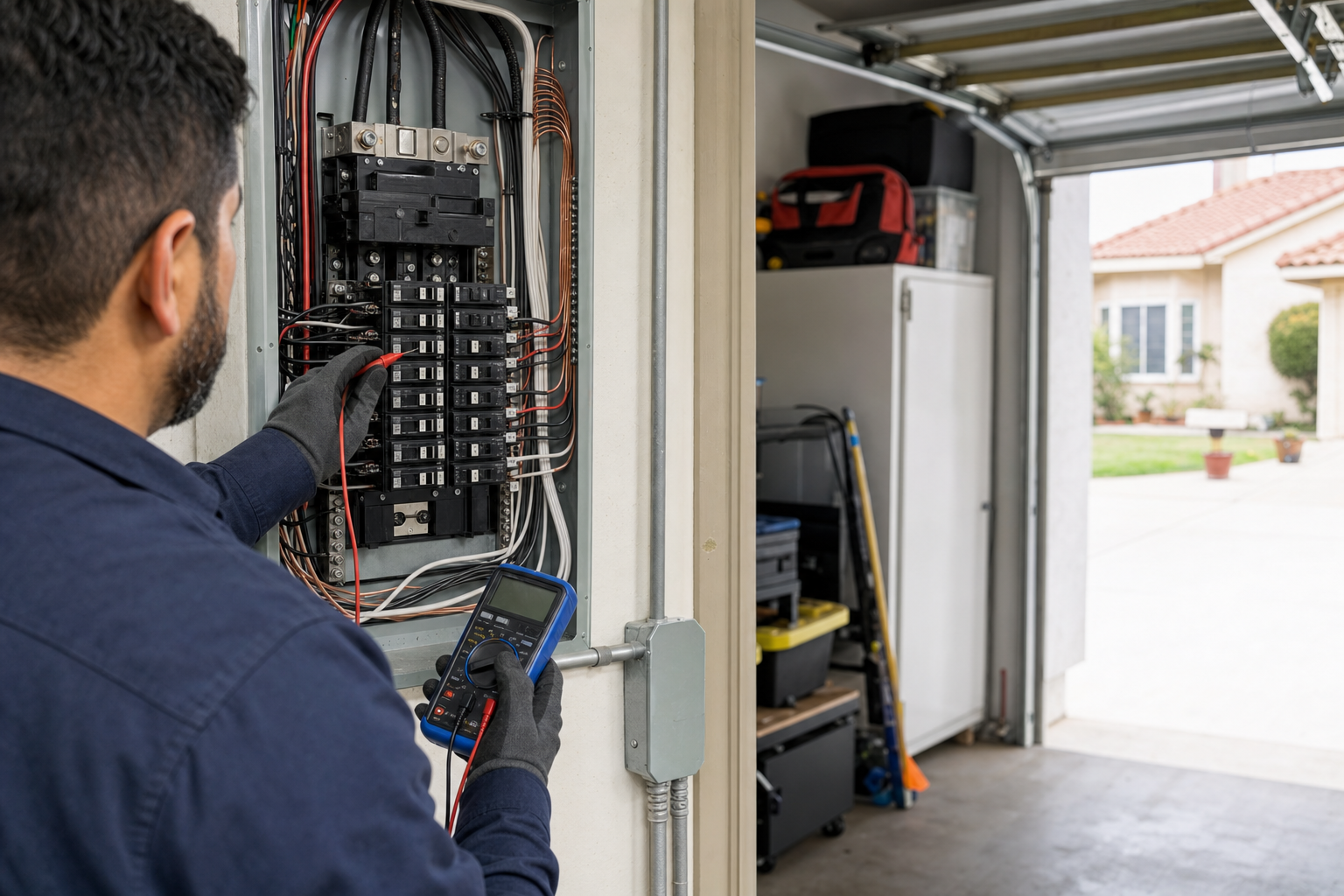
When a repair stops being the right answer
Replacement is not always the next step after a failure. It becomes the right step when one of four things is true: the same component has failed repeatedly, the cost of the next repair is approaching the cost of new equipment, the equipment is unsafe to keep operating, or the building code or efficiency context has changed enough that a like-for-like fix locks in problems for the next decade. panel upgrade in Long Beach sits at this decision point often because the homes are old enough that the equipment installed in the 1990s or 2000s is now reaching honest end-of-life.
The honest replacement conversation includes resale value of the existing equipment, expected useful life of the new equipment, available rebate or financing programs, whether the replacement triggers adjacent code work (panel, vent, gas, slab access, duct), and whether the new equipment requires anything the existing home does not have yet. Long Beach homeowners should ask all five questions before signing. A replacement quote that only describes the new equipment and not the home it goes into is incomplete.
Long Beach and Harbor cluster context: The Long Beach and Harbor cluster mixes coastal moisture, port-driven particulate, municipal-utility complexity, and a building stock that ranges from 1920s bungalows to mid-century duplexes. Service work here often crosses jurisdictional lines — Long Beach Utilities versus SCE versus county-served pockets — and the contractor has to know which rules apply to your specific block.
Quick answer for Long Beach homeowners
Panel Upgrades in Long Beach should start with a clear symptom, a clean access plan, and a realistic view of what can expand the scope. The visible problem may be overloaded service, hot breakers, obsolete equipment, but the visit can change when the property adds sewer cleanout access, same-day traffic from port and freeway corridors, or alley parking. In a garage water-heater closets, the technician may need to reach the equipment, panel, drain, shutoff, cleanout, garage, side yard, attic, crawl space, or utility location before the real diagnostic work starts.
The most useful preparation is simple: use the external booking link, add photos, list the exact symptom, note whether another fixture or appliance is affected, and confirm who controls shutoffs or utility areas. If the call involves no cooling, active leaking, gas odor, burning smell, repeated breaker trips, water heater failure, or a backup that affects more than one fixture, treat it as urgent. If the symptom is stable, use the same process to plan a repair, replacement, or inspection-ready estimate without forcing an emergency premium.
Best first move
Book through the external form, then prepare these items: Photograph the panel label; List major appliances; Identify utility provider; Note AC or EV plans; Clear garage or meter access. For Long Beach, add access notes for alley parking; garage panel access; water and gas shutoff location; sewer cleanout access; same-day traffic from port and freeway corridors.
Why panel upgrade is different in Long Beach
Long Beach editorial note: Long Beach pages should separate city utility questions from contractor repair questions, especially for gas leaks, sewer backups, and water service.
Long Beach sits in the Long Beach and Harbor service cluster and is best understood as a coastal port-adjacent city with older homes, duplexes, apartments, and municipal utility differences. Homes around Belmont Shore edges, Bixby Knolls, West Long Beach, Wrigley, North Long Beach can combine postwar tract homes, small multifamily buildings, older bungalows, garage water-heater closets, flat-lot duplexes on the same few blocks. That mix matters because the same panel upgrade call can require different equipment, ladder access, shutoff windows, garage or side-yard clearance, tenant scheduling, old-panel review, or cleanup protection depending on the property. A postwar tract home may have a slab foundation and old ducts. A small rental may have limited panel labeling and high plumbing use. A compact lot may hide old pipes, old wiring, or nonstandard mechanical routing behind newer finishes.
The local utility context is also part of the plan: Long Beach Utilities context for gas, water, and sewer, with SCE electric planning for many electrical loads. The permit and inspection context is Long Beach Development Services mechanical, electrical, and plumbing permit and inspection context. For panel upgrades, the permit question is: Panel upgrades commonly require permit, inspection, utility coordination, grounding review, and service-size planning. That does not mean every small diagnostic requires a major permit process. It means the repair should be separated from permanent replacement, new circuit work, gas or venting changes, sewer or pipe work, equipment relocation, or any scope that changes the building system.
Long Beach data-point snapshot
Reference points: Belmont Shore edges; Bixby Knolls; West Long Beach; Wrigley; North Long Beach. Building mix: postwar tract homes; small multifamily buildings; older bungalows; garage water-heater closets; flat-lot duplexes. Access profile: alley parking; garage panel access; water and gas shutoff location; sewer cleanout access; same-day traffic from port and freeway corridors. Risk profile: marine-layer corrosion; hard-water scale; old galvanized piping; 100-amp panels; sewer lateral backups; salt-air condenser wear. Seasonal operating context: coastal moisture; port and freeway particulates; summer heat pockets away from the beach. Nearby comparison markets for routing and internal links: Signal Hill, Lakewood, Carson, Bellflower, Paramount.
Panel upgrade field lens
Panel upgrade pages should connect load growth, grounding, meter location, SCE or municipal utility coordination, heat pumps, EV chargers, and old garage panels. In Long Beach, that lens is filtered through sewer cleanout access, same-day traffic from port and freeway corridors, garage water-heater closets, and marine-layer corrosion. This is the reason the page does not treat panel upgrades as a city-name swap: the service decision changes when the home, access, utility, and failure mode change.
The useful proof package is a panel photo, main breaker size, meter location, major appliance list, EV or heat pump plans, and whether any breakers run hot or trip. The weak shortcut is quoting a panel swap without service-size planning, grounding review, utility timing, permit path, and wall or garage access.
- main breaker and service size checked against marine-layer corrosion and alley parking
- meter and panel location checked against hard-water scale and garage panel access
- grounding and bonding checked against old galvanized piping and water and gas shutoff location
- EV or heat pump loads checked against 100-amp panels and sewer cleanout access
- permit and utility sequence checked against sewer lateral backups and same-day traffic from port and freeway corridors
Panel Upgrades proof pack for Long Beach
Long Beach needs extra utility clarity because gas, water, sewer, and inspection context can differ from nearby SCE/SoCalGas cities. Panel upgrades are a money page because the decision touches safety, load growth, EV charging, heat pumps, service size, utility coordination, and inspection timing.
main breaker size, panel label, meter location, grounding visible at the service, hot or tripping breaker history, and planned loads.
For Long Beach, the quote should explicitly account for postwar tract homes, alley parking, and marine-layer corrosion.
quoting a swap before proving service capacity, grounding, meter access, wall repair, and city or county inspection path.
This is a site-readiness and evidence note, not a claim that a specific completed customer job happened at this address.
- Photo target: full panel with door open
- Photo target: main breaker rating
- Photo target: meter and service entrance
- Photo target: garage wall around the panel
A useful Long Beach dispatch note should sound different from a nearby-market note. For this page, the important local signals are Belmont Shore edges, postwar tract homes, alley parking, marine-layer corrosion, and coastal moisture. Those details change how panel upgrades is quoted, staged, diagnosed, and explained. They also help the visit avoid the common failure pattern where the technician arrives with the right trade skill but the wrong access assumptions.
From the truck — panel upgrade field journal
Panel upgrades in Long Beach run into three predictable surprises: undersized service drops that need SCE coordination, grounding electrodes that have to be retrofitted to current code, and meter pan corrosion in coastal-influenced parts of the cluster. The team coordinates SCE meter cuts ahead of schedule, brings grounding rods and clamp adapters for retrofit conditions, and prepares the inspector packet before the work day starts.
Real call from the field
Lakewood 1958 build, original 100A Zinsco panel — known fire-risk equipment. Owners wanted a Tesla Wall Connector. Quoted a 200A upgrade with new grounding. SCE meter coordination was 12 business days; the actual panel swap took 6 hours with a 4-hour outage window. Owner now has a panel that supports the EV charger plus future heat pump on a single load calculation.
I do not just swap panels. I size them. If the panel goes in at 100A on a house that will get a heat pump and EV charger in the next three years, I am setting the homeowner up to pay for two panel upgrades instead of one.
Code, permit, and inspection context for panel upgrade
Code references that govern this work
- NEC Article 230 — services
- NEC Article 250 — grounding and bonding
- NEC Article 408 — switchboards and panelboards
- California Electrical Code (CEC) amendments adopted from NEC 2020/2023
Permit window
Always permit-required. SCE service-disconnect coordination adds 1–3 weeks lead time. Inspection happens after rough-in and before re-energization. Total project window typically 2–5 weeks from contract to live panel.
Typical visit duration
1 day for the panel swap itself if SCE coordination is clean. Wall opening and finishing add a day. SCE outage window is usually 4–8 hours.
Inspection points we verify
- Service entrance conductors sized to new main breaker rating per NEC 310
- Grounding electrode system upgraded if existing is non-compliant
- Bonding jumper at neutral-to-ground in service equipment only
- AFCI/GFCI protection added per CEC for circuits in scope
- Panel directory legible and accurate
What is on the truck
new panel (200A or 225A typical), ground rod kit if existing is single rod, bonding jumpers, AFCI/GFCI breakers per circuit type, weatherhead and SE cable if mast is replaced.
Five questions to ask before approving panel upgrade work
The contractor's answers to these questions tell you whether the visit is going to be diagnostic-led or shortcut-led. There are no trick questions here — these are the questions a thoughtful tradesman is glad to be asked.
- What size service is being installed (100A, 125A, 150A, 200A, 225A) and why?
- Is the grounding electrode system being upgraded if needed?
- Are AFCI/GFCI protection requirements in scope per current code?
- Who coordinates SCE — and what is the expected outage window?
- Is wall finish patching included, or a separate trade?
Common mistakes to avoid in Long Beach
Most of these come from rushing diagnosis or quoting before measurement. They show up across Long Beach on calls our techs end up cleaning up after another contractor.
- Replacing the panel without upgrading grounding — fails inspection
- Like-for-like swap when current loads or future plans justify a service-size increase — locks the homeowner into another panel project later
- Not coordinating SCE early enough — owner sits without power longer than necessary
- Re-using the old SE cable when it is undersized for the new main
Repair, replace, or inspection — decision criteria
Panel upgrade is mandatory when current panel is recalled (Federal Pacific Stab-Lok, Zinsco, certain Pushmatic), when adding loads exceeds available capacity, or when grounding is non-compliant. It is optional but smart when planning electrification (heat pump + EV + induction).
How panel upgrade is sequenced step by step
This sequence is what a properly run panel upgrade project looks like — written for the homeowner who wants to know what should be happening and when.
- Load calculation and service-size decision. Run a NEC 220 load calculation with current loads plus reasonably planned future loads (heat pump, EV charger, induction range). Size the new service accordingly — usually 200A or 225A.
- SCE service-disconnect coordination. File the SCE meter-cut request once the permit is approved. Lead time is typically 5-15 business days. Schedule the install around the confirmed SCE outage window.
- Permit and grounding scope. Pull the electrical permit. Inspect existing grounding electrodes — if non-compliant, plan to upgrade as part of the project, not as a separate visit later.
- Old panel removal and new panel install. Coordinate the SCE outage. Remove the old panel and meter pan, install the new panel with proper grounding, bonding, and conductor routing per NEC 230 and 250.
- Circuit migration and labeling. Move circuits to the new panel with appropriate AFCI/GFCI breakers per current code. Label the directory legibly. Test each circuit before re-energizing.
- SCE reconnect and inspection. SCE re-energizes after the inspection signs off. Final inspection verifies grounding, bonding, breaker types, and labeling.
Common failure modes and hidden risks
For this service, the common technical risks include overloaded service, hot breakers, obsolete equipment, poor grounding, failed inspection. In Long Beach, local risks such as marine-layer corrosion, hard-water scale, old galvanized piping, 100-amp panels, sewer lateral backups, salt-air condenser wear can make those symptoms more expensive or more urgent. A cooling failure may be caused by a small part, but condenser condition, airflow restrictions, dusty coils, or electrical disconnect problems can change the visit. A panel or EV charger issue may look like one circuit, but load calculations, utility coordination, or old grounding can decide whether the work is safe. A plumbing leak may look contained, but water can move under slabs, behind cabinets, through walls, and toward electrical areas faster than most owners expect.
Do not keep resetting breakers, running water into a backed-up drain, using a leaking water heater, or operating HVAC equipment that smells hot or is spilling water. Those actions can turn a repair into broader home damage. The safer path is to isolate what you can, document the symptom, protect nearby areas, and book a visit with complete access notes.